

7-to-1 Student Teacher Ratio


Multiple Locations Across NJ

View Financing Plans
HVAC Training in New Jersey
Our HVAC Technician Training Program delivers the most comprehensive hands-on HVAC training in New Jersey, designed to help students start a successful career in HVAC. This hybrid program blends classroom learning with hands-on technical training, giving you real-world experience working with the same equipment you’ll work on in the field. With multiple HVAC labs across the state, we provide top-rated HVAC training to students throughout New Jersey.
You will learn core HVAC skills and actively perform repairs and installations in settings that mirror job scenarios. The curriculum is extensive, covering heat pump technology, electrical circuitry, residential and commercial systems, EPA regulatory compliance, refrigerant cycle diagnostics, wiring schematics, and advanced troubleshooting.
This is a complete HVAC career program built to prepare you to graduate job-ready. You will graduate with a HVAC Training Certificate, EPA 608 Certification, A2L Refrigerant Certification, an OSHA-10 Safety Card, a full tool bag, and the NJ state-recognized training hours needed for long-term career advancement.
Accredited & NJ Approved HVACR School


The Training Center is a New Jersey DOL and DOE-approved HVAC trade school. The training hours earned in this program count directly toward state requirements and serve as the official first step toward a professional HVAC career in NJ. This places graduates on the required path from education to an Apprentice role, which is needed to eventually become a Journeyman and a Licensed Master HVACR Contractor. We are also approved by the EPA and accredited by the IACET.
Program Details & Class Schedule
This 11-month HVAC training program consists of 85 classes, 47 of which are in-person at your choice of either our Wrightstown, NJ or Branchburg, NJ locations. The program offers a flexible schedule and combines online learning with in-person hands-on training to help you gain the skills to start a career as an HVAC technician. The total cost is $15,000, with financing plans available. There are no hidden fees or added costs. Everything is covered in the tuition cost, including all tools, books, materials, certifications, and digital learning resources.
Branchburg, NJ

Semester Starts
Coming Soon
Wrightstown, NJ

Semester Starts
October 27, 2026
Tuition Details & Program Overview
Program Details:
- Program Length: 11 months
- Format: Hybrid (Online + In-Person Lab Training)
- Schedule: 2 Classes Per Week (2 Hours Each)
- Online Classes (Your Choice): 10 AM–12 PM or 6–8 PM
- Lab Sessions (Your Choice): 8–10 AM, 12–2 PM, or 6–8 PM
- Total Training Hours: 192 hours
- Student-to-Teacher Ratio: 7:1
- Location: Choose either our Wrightstown, NJ or Branchburg, NJ campus.
Tuition & What’s Included:
- Total Tuition Cost: $15,000
- Financing plans are available. View payment plan options.
- This cost includes all tools, books, materials, resources, and certifications.
- Every student receives a tool bag with professional HVAC tools, included in the tuition cost.
- Military: This program is approved for VA education benefits, including the GI Bill.
Credentials Earned Upon Graduation
- HVAC Training Certificate (with detailed transcript)
- NJ State Board Approved Educational Hours
- EPA 608 Universal Certification
- A2L Refrigerant Certification
- OSHA-10 Safety Card
Full Schedule for TBD Semester (Branchburg, NJ)
The schedule for the 2027 semester will be coming soon.
Full Schedule for October 2026 Semester (Wrightstown, NJ)
The table below includes the complete October 2026 schedule. Classes are held on Tuesdays and Thursdays. Students may choose from the following class times:
- Online Classes (Your Choice): 10 AM–12 PM or 6–8 PM.
- Lab Training Sessions (Your Choice): 8–10 AM, 12–2 PM, or 6–8 PM.
| HVAC Training Module | Session | Date | Format |
|---|---|---|---|
| Career Development | 1.1 | October 27, 2026 | Online |
| 1.2 | October 29, 2026 | Lab | |
| 1.3 | November 3, 2026 | Online | |
| 1.4 | November 5, 2026 | Online | |
| Thermodynamics & Heat Theory | 2.1 | November 10, 2026 | Online |
| 2.2 | November 12, 2026 | Online | |
| 2.3 | November 17, 2026 | Online | |
| 2.4 | November 19, 2026 | Online | |
| Basic Electricity for HVAC | 3.1 | December 1, 2026 | Online |
| 3.2 | December 3, 2026 | Lab | |
| 3.3 | December 8, 2026 | Online | |
| 3.4 | December 10, 2026 | Lab | |
| 3.5 | December 15, 2026 | Online | |
| 3.6 | December 17, 2026 | Lab | |
| 3.7 | January 5, 2027 | Online | |
| 3.8 | January 7, 2027 | Lab | |
| Advanced Electricity & Motors for HVAC | 4.1 | January 12, 2027 | Online |
| 4.2 | January 14, 2027 | Lab | |
| 4.3 | January 19, 2027 | Online | |
| 4.4 | January 21, 2027 | Lab | |
| 4.5 | February 2, 2027 | Online | |
| 4.6 | February 4, 2027 | Lab | |
| 4.7 | February 9, 2027 | Online | |
| 4.8 | February 11, 2027 | Lab | |
| 4.9 | February 16, 2027 | Online | |
| 4.10 | February 18, 2027 | Lab | |
| 4.11 | February 23, 2027 | Online | |
| 4.12 | February 25, 2027 | Lab | |
| 4.13 | March 2, 2027 | Online | |
| 4.14 | March 4, 2027 | Lab | |
| Hydronic Boiler & Pump Systems | 5.1 | March 9, 2027 | Online |
| 5.2 | March 11, 2027 | Lab | |
| 5.3 | March 16, 2027 | Online | |
| 5.4 | March 18, 2027 | Lab | |
| 5.5 | March 23, 2027 | Online | |
| 5.6 | March 25, 2027 | Lab | |
| 5.7 | March 30, 2027 | Online | |
| 5.8 | April 1, 2027 | Lab | |
| 5.9 | April 6, 2027 | Online | |
| 5.10 | April 8, 2027 | Lab | |
| EPA Universal Certification | 6.1 | April 13, 2027 | Online |
| 6.2 | April 20, 2027 | Online | |
| 6.3 | April 22, 2027 | Online | |
| 6.4 | April 27, 2027 | Online | |
| 6.5 | April 29, 2027 | Lab | |
| Refrigeration Cycle | 7.1 | May 4, 2027 | Online |
| 7.2 | May 6, 2027 | Lab | |
| 7.3 | May 25, 2027 | Online | |
| 7.4 | May 27, 2027 | Lab | |
| 7.5 | June 1, 2027 | Online | |
| 7.6 | June 3, 2027 | Lab | |
| 7.7 | June 8, 2027 | Online | |
| 7.8 | June 10, 2027 | Lab | |
| Refrigeration Practices | 8.1 | June 15, 2027 | Online |
| 8.2 | June 17, 2027 | Lab | |
| 8.3 | June 22, 2027 | Online | |
| 8.4 | June 24, 2027 | Lab | |
| 8.5 | June 29, 2027 | Online | |
| 8.6 | July 1, 2027 | Lab | |
| 8.7 | July 6, 2027 | Lab | |
| 8.8 | July 8, 2027 | Lab | |
| 8.9 | July 13, 2027 | Lab | |
| 8.10 | July 15, 2027 | Lab | |
| Air Source Heat Pumps | 9.1 | July 20, 2027 | Online |
| 9.2 | July 22, 2027 | Lab | |
| 9.3 | July 27, 2027 | Lab | |
| 9.4 | July 29, 2027 | Lab | |
| HVAC Troubleshooting | 10.1 | August 3, 2027 | Lab |
| 10.2 | August 5, 2027 | Lab | |
| 10.3 | August 10, 2027 | Lab | |
| 10.4 | August 12, 2027 | Lab | |
| 10.5 | August 17, 2027 | Lab | |
| 10.6 | August 19, 2027 | Lab | |
| 10.7 | August 24, 2027 | Lab | |
| 10.8 | August 26, 2027 | Lab | |
| 10.9 | August 31, 2027 | Lab | |
| 10.10 | September 2, 2027 | Lab | |
| Gas Combustion | 11.1 | September 7, 2027 | Online |
| 11.2 | September 9, 2027 | Lab | |
| 11.3 | September 14, 2027 | Online | |
| 11.4 | September 16, 2027 | Lab | |
| 11.5 | September 21, 2027 | Lab | |
| 11.6 | September 23, 2027 | Lab | |
| HVAC Professional Development | 12.1 | September 28, 2027 | Online |
| 12.2 | September 30, 2027 | Lab |
HVAC Training Locations
Visit our location pages to explore each campus and schedule a visit; our instructors are always happy to show you around our school.
- Explore our Branchburg, NJ Campus – 3087 US-22, Branchburg, NJ 08876
- Explore our Wrightstown, NJ Campus – 113 Monmouth Rd, Wrightstown, NJ 08562
Inside Our HVAC Training Labs:
The Training Center provides HVAC training in New Jersey at two convenient locations in Wrightstown and Branchburg. Each campus features professional-grade training labs, classrooms, and modern simulator boards engineered to mirror real-world environments. Choose the campus that works best for you.
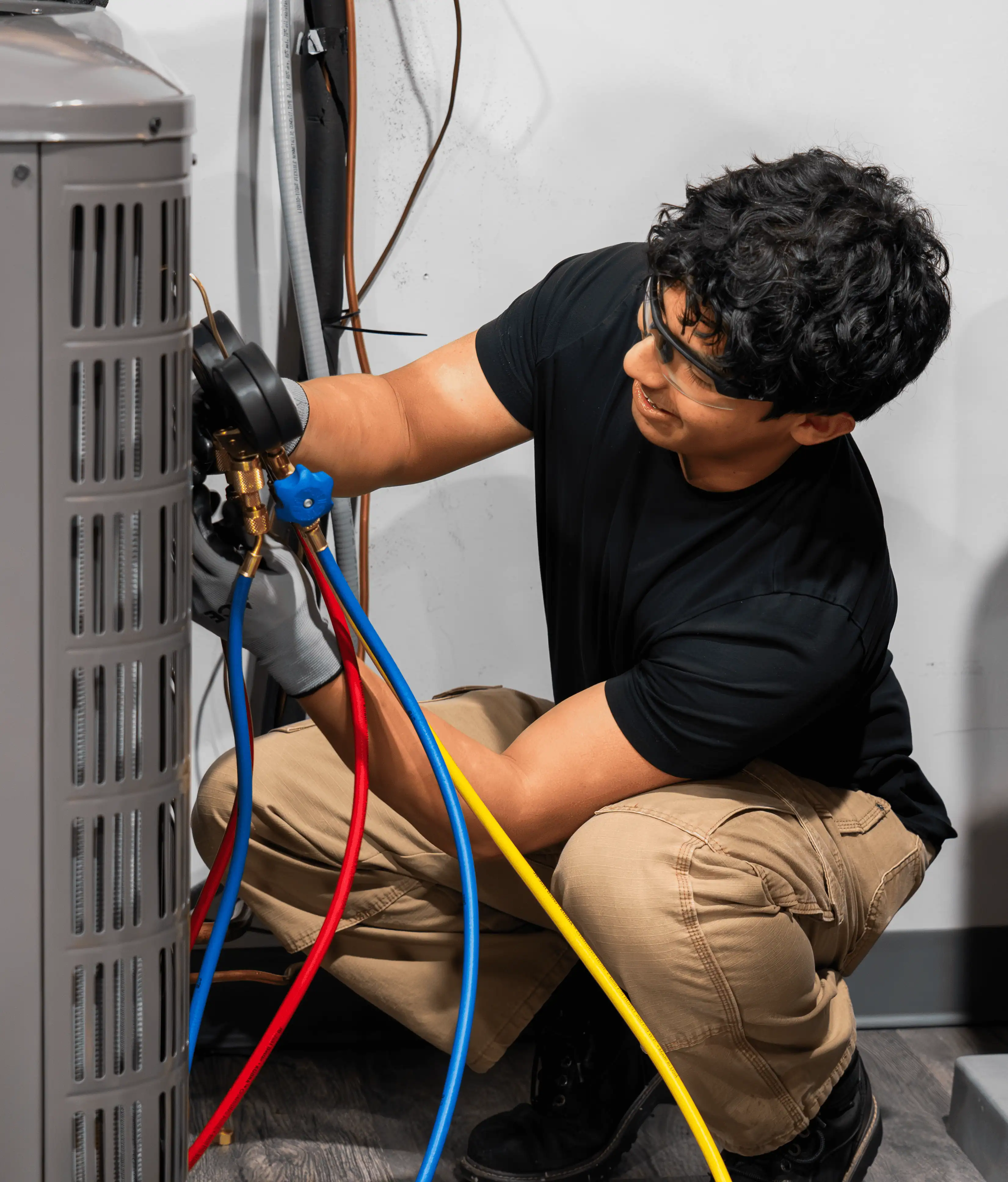
- Residential Heat Pump Stations: Complete heating and cooling setups equipped with auxiliary electric backup systems.
- Gas Furnace & AC Configurations: Physical furnace units fully integrated with central air conditioning systems and hybrid fossil fuel kits.
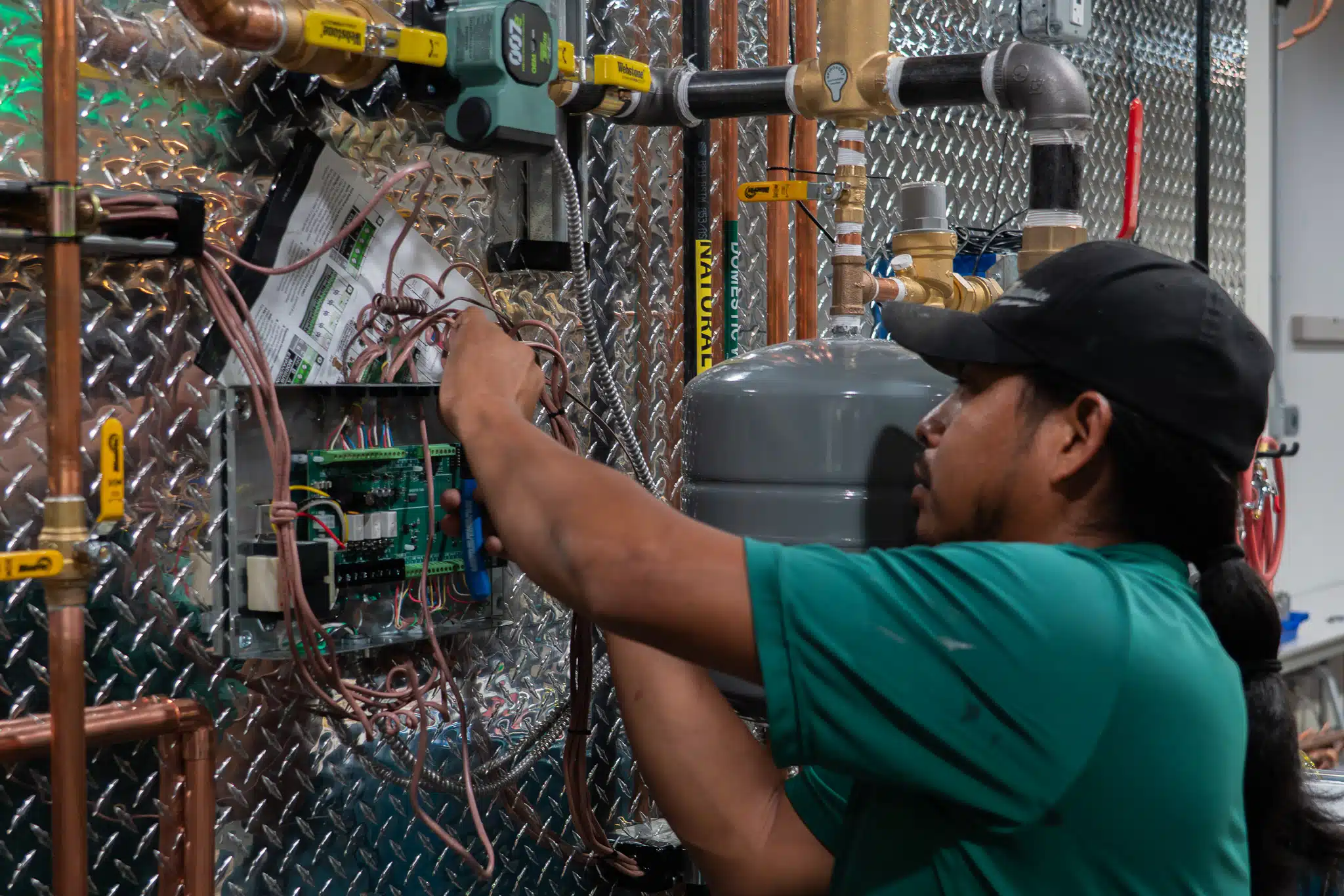
- Hydronic Boiler Walls: High-efficiency Combi and standard boilers connected to custom hydronic walls featuring live circulation pumps, piping, and zone controls.
- iConnect Diagnostic Trainers: Professional-grade TU-100 refrigeration trainers and TU-601 multi-head compressor systems featuring built-in, hardwired fault codes for advanced troubleshooting.
- Custom Electrical Control Boards: Proprietary, in-house built electrical panels designed for hands-on wiring of relays, zone valves, and field controls.
- Commercial Rack Refrigeration: Heavy-duty rack refrigeration trainers engineered for advanced piping, system wiring, and pressure diagnostics.
NJ HVAC Tuition Compared
See how our cost compares to other NJ HVAC trade schools

Student-to-Teacher Ratios
See how our small class sizes compare to other NJ trade schools

Worried about tuition?

HVAC Program Benefits
Professional Tool Bag Included

HVAC Technician Training Curriculum
Our HVAC technician training program includes a comprehensive curriculum of 12 educational modules, helping students learn HVAC systems. The curriculum includes course topics across HVAC, heating, ventilation, air conditioning, and refrigeration.
Career Development
We start by learning The Student Mentality (TSM) and encouraging students to create a mindset of being a lifelong learner. Effective communication is an important skill for any HVAC professional, and we will explore ways to improve with clients, co-workers, and more. Developing a proper work-life balance is one of the keys to a successful HVAC career.
Thermodynamics & Heat Theory
Basic Electricity for HVAC
Advanced HVAC Electricity & Electric Motors
Hydronic Boiler & Pump Systems
Refrigeration Cycle
Refrigeration Practices
EPA Test Prep
Air Source Heat Pumps
HVAC Troubleshooting
Gas Combustion & Heating Systems
HVAC Professional Development
Why The Training Center


Our Difference
Trusted for over 40 years and recognized as a top HVAC trade school in NJ for training. Learn what sets us apart.

Student Success
More than just a school, we’re lifelong partners in our students’ careers, and we’re proud to share their success.

Reviews
We put students first, and their success matters most. See what some of our students say about their experiences.

Accreditation
Top HVAC School in NJ
At The Training Center, we have over 40 years of experience helping students build successful careers in the trades. Our HVAC school in New Jersey offers classes designed for all experience levels, from beginners to professionals. Our programs specialize in training for certifications, state licensing, and career development. We also offer flexible schedules with day and night classes available. Our top-rated HVAC technician training serves students across the entire state of New Jersey, including:

North Jersey
- Bergen County
- Essex County
- Hudson County
- Morris County
- Passaic County
- Sussex County
- Warren County
Central Jersey
- Hunterdon County
- Mercer County
- Middlesex County
- Monmouth County
- Somerset County
- Union County
South Jersey
- Atlantic County
- Burlington County
- Camden County
- Cape May County
- Cumberland County
- Gloucester County
- Ocean County
- Salem County
Frequently Asked Questions (FAQs)
Is The Training Center an accredited provider of HVAC Training?
Yes. As an IACET Accredited Provider, The Training Center offers IACET CEUs for its learning events that comply with the ANSI/IACET Continuing Education and Training Standard.
How long does it take to complete HVAC technician training in New Jersey?
The Training Center’s HVAC Technician Training Program takes 11 months to complete. The schedule combines online learning with hands-on lab sessions at our New Jersey campuses, making it manageable for working adults while still preparing you for a career in HVAC.
Do I need prior HVAC experience to enroll?
No prior experience is required. The program is designed for beginners, career changers, and professionals entering HVAC for the first time. Training starts with fundamentals and builds step by step, so anyone can succeed.
Are the training hours in this HVAC program officially approved by the State of New Jersey?
Yes. Our HVAC Training Program is officially approved by the New Jersey Department of Labor (NJ DOL) and Department of Education (NJ DOE). The hours you earn in this program count directly toward the Related Technical Instruction (RTI) required by the New Jersey State Board of Examiners of HVACR Contractors for state licensure.
What certifications will I earn in this HVAC program?
Upon graduation, you will earn multiple industry-recognized credentials that are highly valued by employers. You will receive an official HVAC Training Certificate. Additionally, you will earn your EPA 608 Universal Certification, an A2L Refrigerant Certification, and an OSHA-10 Safety Card.
How much does HVAC training cost in New Jersey?
The total tuition for our HVAC Training program is $15,000. This cost covers everything you need with no added fees, including all tools, books, materials, certifications, and digital learning resources. Financing plans are also available.
Does the HVAC program include job placement support?
We provide dedicated job placement support designed to help you get hired as an HVAC apprentice. This includes resume building, interview preparation, a verified skills logbook, and connecting you with hiring partners. We actively build relationships with local HVAC companies and mechanical contractors across New Jersey to help graduates secure employment in the trade.
Where are your HVAC training locations in New Jersey?
We offer HVAC training at two convenient campuses in Wrightstown, NJ and Branchburg, NJ. Both locations serve students across New Jersey, providing easy access to training throughout the state.
Are HVAC jobs in demand in New Jersey?
Yes. HVAC technicians are in strong demand across New Jersey due to industry growth, retirements, and new refrigerant regulations. This creates excellent job opportunities and salary potential for skilled technicians.
How does The Training Center compare to other top HVAC schools in NJ?
The primary differences are tuition, class size, schedule flexibility, and earned credentials. The Training Center offers lower tuition, smaller classes with a 7-to-1 student-to-instructor ratio, a focus on field-ready HVAC skills, and more industry certifications upon graduation.
What’s the difference between HVAC trade school and community college programs?
HVAC trade schools focus on hands-on, career-specific training designed to prepare students for employment quickly. Community college programs often take longer to complete, include general education requirements, and are more classroom-focused.
HVAC Resources


Start Your HVAC Career Today!
HAVE QUESTIONS?