Electrician Training Program

New Jersey’s Top Rated Program to Start a Career as an Electrician

190 per Month VOLT Icon
*Financing plans available.*
Total Tuition: $15,000
Student Ratio VOLT Icon
10-to-1 Student Teacher Ratio
VOLT Badge 3d Logo
NJ Map VOLT Icon
Branchburg, NJ Campus
Flexible Schedule VOLT Icon
10 Months, Flexible Schedule

Electrician Training in New Jersey

Our Electrician Training Program provides the most comprehensive hands-on electrician training in New Jersey, designed to help students start a successful career in the electrical industry. This 10-month program combines classroom learning with intensive hands-on lab training, giving you real-world experience working with the same tools, materials, and systems used by professional electricians in the field.

You’ll learn core electrician skills across residential, commercial, and industrial systems. The curriculum is aligned with the National Electrical Code (NEC) as adopted by the New Jersey Uniform Construction Code. You will gain direct experience with commercial conduit bending, electrical service wiring, 3-phase power, industrial motor controls, and more. Students also cover high-demand systems like Fire Alarm and Low Voltage (Cat 6), developing the blueprint reading and troubleshooting skills that employers actively look for in apprentices.

This is a complete electrician career program built to prepare you to graduate job-ready. Students graduate with an Electrician Training Certificate, OSHA 10-Hour Construction Card, NFPA 70E Electrical Safety Certificate, a professional tool bag, and the sponsored state-recognized training hours needed for long-term career advancement.

Electrical Continious education Electrical Logo

NJ Approved Electrical Education Sponsor

The Training Center is an approved Electrical education sponsor in New Jersey. This program fulfills the state’s training requirement for licensure and is the official first step toward a professional electrician career in NJ, placing graduates on the required path from Registered Apprentice to Journeyman status to Licensed Electrical Contractor. The Training Center is also accredited by IACET (International Accreditors for Continuing Education and Training).

Comprehensive Electrical Training

Unlike other trade schools that focus primarily on electrical theory and basic residential wiring, our Electrician Training Program goes deeper, covering the complete scope of electrical work across residential, commercial, and industrial environments. Our multi-zone, professional-grade lab is built to match the real-world demands of the field, ensuring you graduate job-ready for all the major and high-growth sectors of the New Jersey electrical industry.
Residential Electrician Blue Icon

Residential Electrician

Develop skills to wire homes from rough-in to finish. Perform service panel upgrades, install lighting and receptacles, and troubleshoot residential electrical systems to NEC standards.
Commercial Electrician Blue Icon

Commercial Electrician

Install conduit and wiring in offices, schools, and healthcare facilities. Learn EMT bending, blueprint reading, panelboard installation, and higher-voltage commercial circuits.
Industrial Electrician Blue Icon

Industrial Electrician

Prepare for industrial settings using three-phase power, motor controls, and transformers. Troubleshoot distribution systems powering heavy machinery in manufacturing facilities.
Low Voltage & Fire Alarm Technician Blue Icon

Low Voltage & Fire Alarm Technician

Train in low-voltage and life-safety systems for commercial buildings. Install Cat 6 cabling, device terminations, and fire alarm components meeting NEC and NFPA 72 standards.
EV Charging, Solar & Emerging Energy Systems Blue Icon

EV Charging, Solar & Emerging Energy Systems

Gain experience with EV chargers and solar electrical systems. Learn load calculations, service capacity evaluation, grounding, and NEC safety requirements for modern energy systems.
Maintenance & Facilities Electrician Blue Icon

Maintenance & Facilities Electrician

Work in hospitals, universities, and large facilities maintaining electrical systems. Perform preventative maintenance, troubleshoot failures, and ensure continuous system operation.

Program Schedule & Class Details

This 10-month Electrician training program delivers 800 hours of lab-driven learning at our Branchburg, NJ location. To accommodate your schedule, we offer unmatched flexibility with three daily session options: Morning, Afternoon, or Evening. Classes run Monday through Thursday, with Fridays reserved for optional make-up days, allowing you to balance training with your life. You will graduate field-ready, equipped with the specialized electrical skills to make an immediate impact as an apprentice. The total program cost is $15,000, with financing plans starting as low as $190 per month. There are no hidden fees; tuition covers your personal tool bag, books, materials, certificates, and 24/7 access to our online learning system.

Branchburg, NJ

VOLT NJ Map Image

Semester Starts

July 1, 2026

Electrician Training Program Overview

Program Details:

  • Program Length: 10 Months (40 Weeks)
  • Format: In-Person labs
  • Total Training Hours: 800 Hours
  • Student-to-Teacher Ratio: 10:1
  • Location: Branchburg, NJ campus
  • Schedule: 4 Classes per week (5-hours each)
  • Class Options: Classes run Monday through Thursday. To accommodate working students, we offer three separate sessions per day. You simply choose the one time slot that fits your schedule (Morning, Afternoon, or Evening). Fridays are reserved as optional make-up days if you miss a class.
Class Option (Your Choice)Start Time (Mon - Thu)End Time
(Mon - Thu)
Friday
Morning Class7:00 AM12:00 PMOptional Make-Up
Afternoon Class12:30 PM5:30 PMOptional Make-Up
Evening Class6:00 PM11:00 PMOptional Make-Up

Tuition & What’s Included:

  • Total Tuition Cost: $15,000
  • This cost includes all tools, books, training materials, and certificates.
  • Every student receives a personal tool bag with high-quality professional electrician tools, included in the tuition cost
  • Flexible financing plans are available

Credentials Earned Upon Graduation:

  • NJ State Board Approved Educational Hours
  • Electrician Training Certificate of Completion (with official transcript)
  • OSHA 10-Hour Construction Card
  • NFPA 70E Electrical Safety Certificate

Full Schedule for TBD Semester (Branchburg, NJ)

Schedule Coming Soon

Class Format & Training Hours

Our Electrician Training Program includes a total of 800 hours, divided between classroom and hands-on lab sessions. Below is the breakdown of hours:

  • Classroom Lecture: 210 Hours
  • Hands-on Lab: 590 Hours
  • Program Total: 800 Hours

Electrician Training Location

The Training Center provides electrician training in New Jersey at our Branchburg location. This campus features a professional-grade electrical lab with multiple zones designed to simulate real-world job sites. You will train in dedicated residential stations that include kitchens, bathrooms, and bedrooms. You will also learn in our commercial and industrial zones featuring office setups, handicap-accessible facilities, and dedicated stations for Electrical Metallic Tubing (EMT) conduit bending and commercial wiring.

Visit our location page to explore our school and schedule a visit; our instructors are always happy to show you around.

Worried about tuition?

Financing Plans Are Now Available

Electrical Program Benefits

A-man-adjusts-equipment-while-another-man-observes-in-a-workshop-or-training-facility

Field-Ready Skills

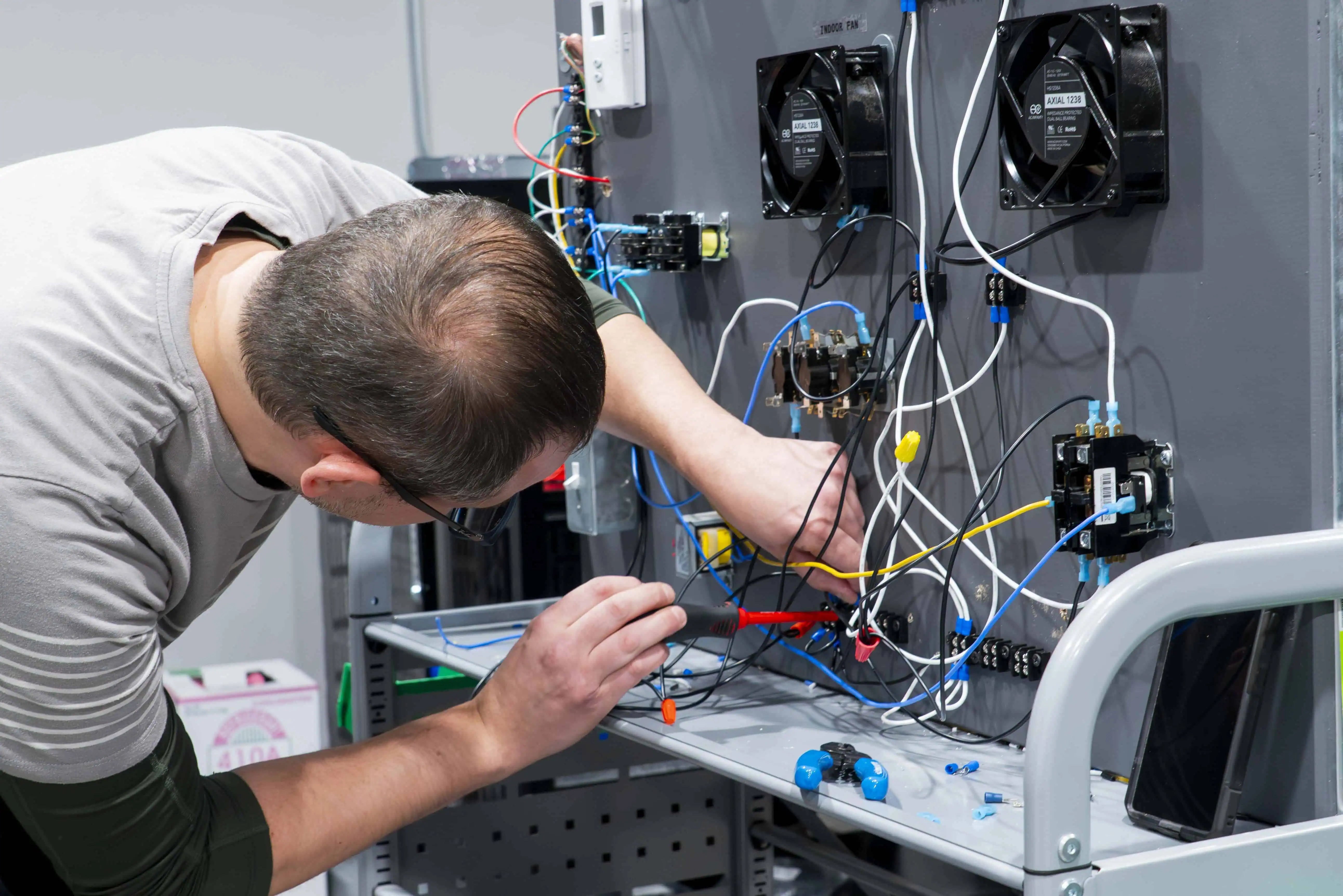
Unlike other electrical schools that only cover the basics, our program builds the comprehensive skills needed to succeed across the entire electrical industry. Students gain a strong foundation in residential wiring, commercial conduit bending, and industrial motor controls. The curriculum is focused on the National Electrical Code (NEC), ensuring you learn to navigate the complex regulations required for legal and safe installations in New Jersey. You will perform rough-ins, blueprint reading, and troubleshooting in residential and commercial scenarios, preparing you to succeed as an apprentice. Students graduate field-ready with the knowledge to work with Romex, MC Cable, and EMT conduit, making an immediate impact on the job site.
Man-pointing-at-a-control-panel-while-another-holds-a-clipboard

Hands-On Training

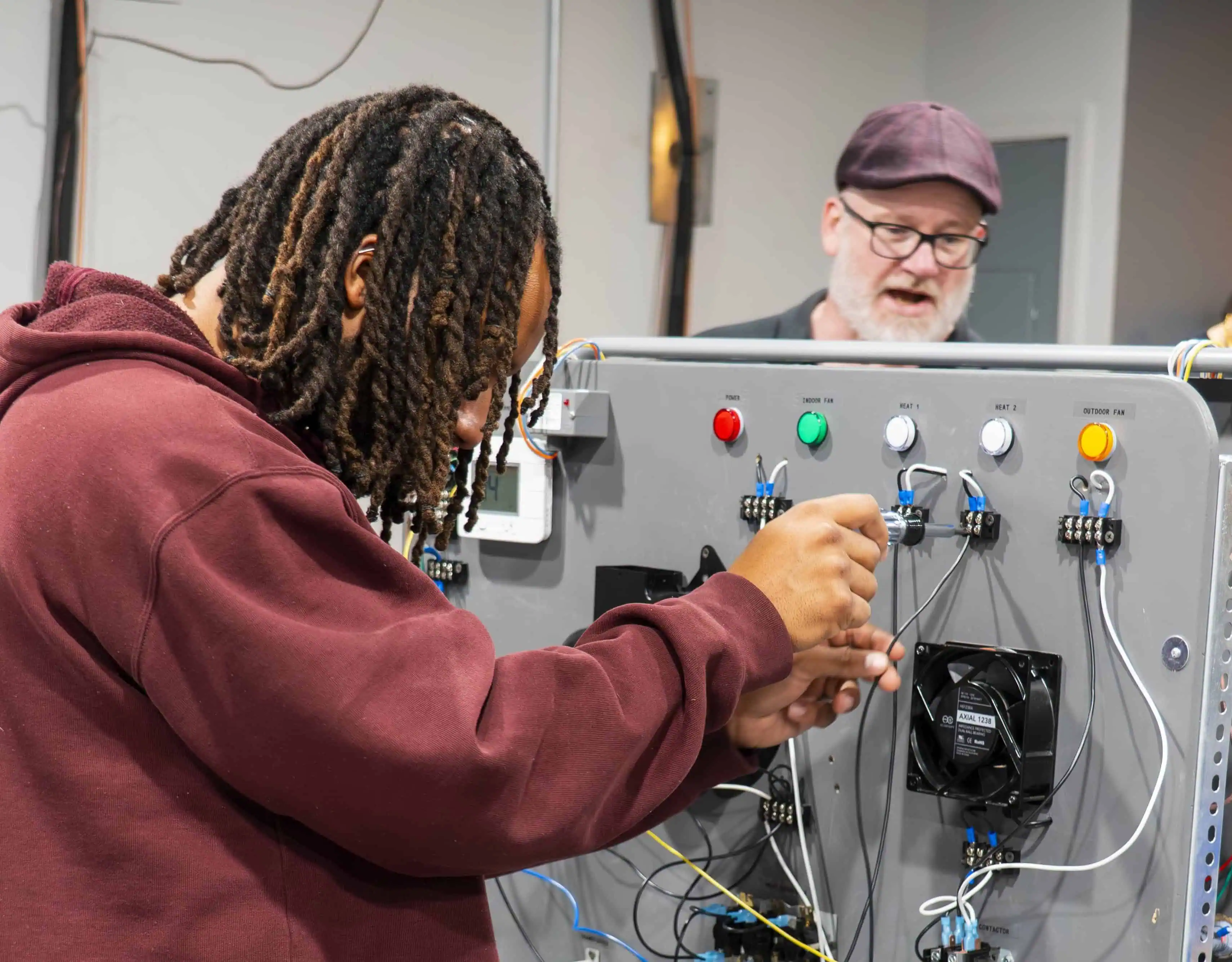
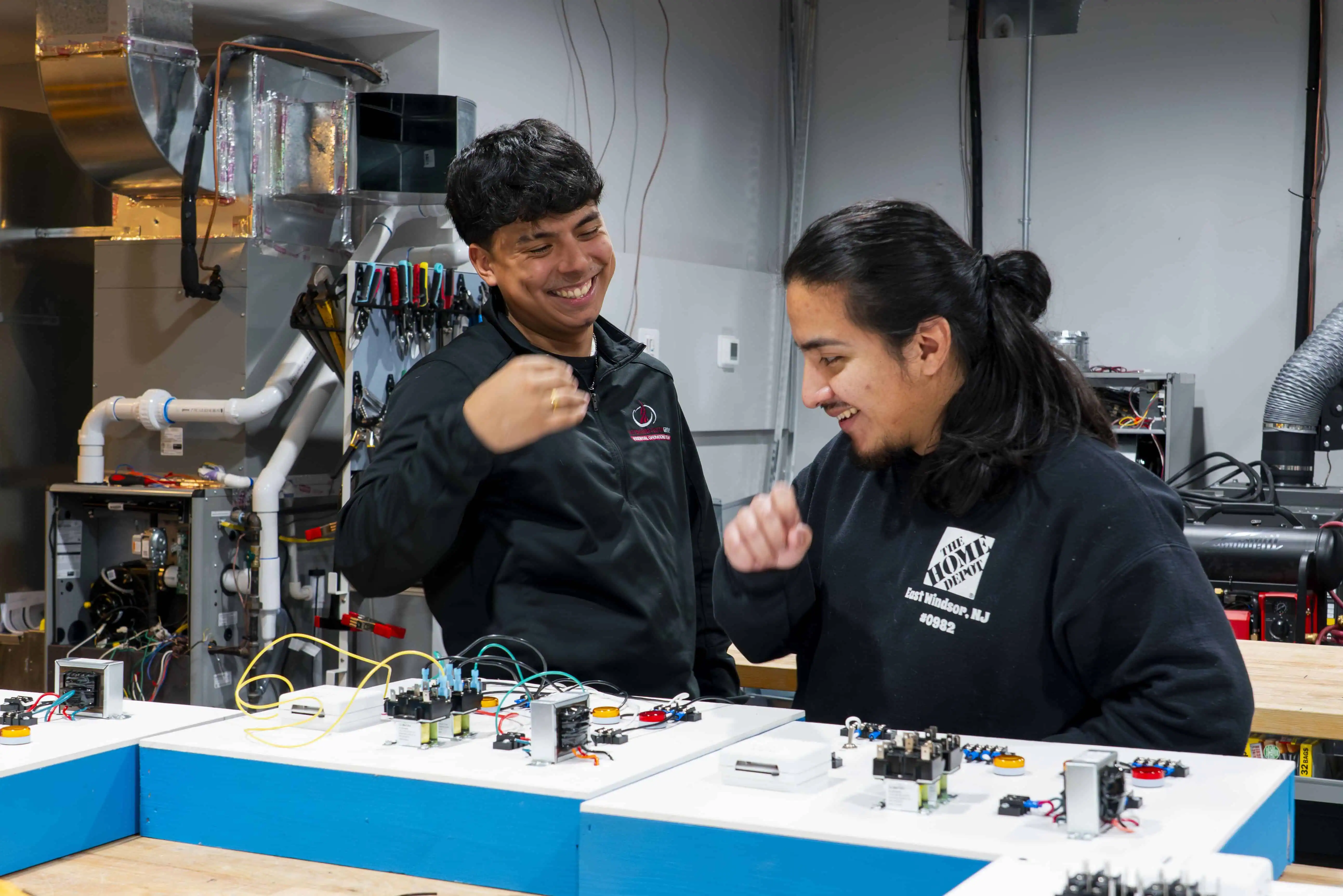
While many trade schools keep you stuck in the classroom focusing on theory, our program is 75% hands-on training. You will move beyond the textbook to work directly with the tools and materials used by electricians in the field. Our professional-grade electrical lab features multiple zones that simulate a wide variety of real-world environments, allowing you to gain experience in fully framed residential rooms, commercial office setups, and industrial stations. We offer flexible class options to help you fit training into your busy life, so you never have to choose between your education and your current responsibilities. With a low 10-to-1 student-to-teacher ratio, you receive personalized coaching, ensuring you build the practical skills needed for a successful electrical career.
A-group-of-people-is-engaged-in-discussion-with-a-speaker-near-an-industrial-machine-in-a-facility

Path to NJ License

To become a Licensed Electrical Contractor in New Jersey, you must complete 576 hours of related technical instruction. Our program is officially approved and delivered under a Continuing Education Sponsor registered with the New Jersey Board of Examiners of Electrical Contractors. This program fully satisfies the state’s educational mandate, making it the official first step in your NJ electrical career. Upon completion, you are qualified to register as an apprentice, placing you on the direct path from student to Journeyman and eventually to Licensed Electrical Contractor.
A-group-of-people-is-engaged-in-discussion-with-a-speaker-near-an-industrial-machine-in-a-facility

Personal Tool Bag

We believe every student should start their electrical career fully prepared. That is why each student receives a complete industry-standard tool bag filled with professional equipment used in the field. Included in your tuition at no additional cost, this set features high-quality essentials from top manufacturers like Klein Tools and Milwaukee. It comes stocked with lineman’s pliers, wire strippers, a digital clamp meter, insulated screwdrivers, a magnetic torpedo level, and a non-contact voltage tester. This full kit ensures you have the right tools to succeed on the job.
A-group-of-people-is-engaged-in-discussion-with-a-speaker-near-an-industrial-machine-in-a-facility

Job Placement Support

Our goal is to help every student start a successful career as an electrician. A key benefit of our program is the career support provided to each student, including digital resume building, career planning, interview preparation, and direct connections with hiring partners. We build relationships with companies across New Jersey to help our graduates secure registered electrical apprenticeships. Regardless of which sector of the electrical industry you choose to pursue, our team is committed to positioning you for long-term success in the trade.

Electrician Training Curriculum

Our electrician training program features an extensive curriculum spanning 18 core modules designed to develop the essential skills needed for a successful career in the electrical industry. The course covers the full scope of residential, commercial, and industrial systems, with a strong focus on NEC code compliance and the licensing standards established by the New Jersey Board of Examiners.

Electrical Safety, OSHA Compliance & NFPA 70E

Safety is the first requirement on any electrical job site. This module covers OSHA construction safety standards and NFPA 70E regulations. Students gain an in-depth understanding of electrical shock hazards, arc flash and arc blast risks, and the physiological effects of milliamperage on the human body. Training focuses on establishing an Electrically Safe Work Condition (ESWC) using Lockout/Tagout (LOTO) procedures, identifying Arc Flash Boundaries, and selecting appropriate Category-rated Personal Protective Equipment (PPE).

Electrical Theory, Ohm’s Law & Power Calculations

This module builds the mathematical foundation of the electrical trade. Students study Ohm’s Law and the Power Formula to calculate voltage, amperage, resistance, and wattage in AC and DC circuits. Topics include Joule heating, conductor resistance, load analysis, and power dissipation. Emphasis is placed on applying electrical theory to real-world installations and troubleshooting scenarios.

National Electrical Code (NEC) & NJ Code Compliance

Anchored in the NFPA 70 National Electrical Code (NEC), this module teaches students how to navigate and apply the code as adopted by the New Jersey Uniform Construction Code (UCC). Instruction focuses on Articles 90, 100, and 110, helping students distinguish mandatory requirements from informational notes. Students learn how to perform installations that meet jurisdictional standards and pass electrical inspections conducted by local authorities, and are introduced to the role of the Authority Having Jurisdiction (AHJ) and the electrical inspection process, including how inspectors interpret NEC requirements in the field. Emphasis is placed on proper documentation, workmanship standards, and common inspection deficiencies to ensure installations are inspection-ready.

Conductors, Splicing & Termination Methods

Students learn the physics of secure electrical connections. This module covers conductor insulation ratings, proper stripping techniques, and torque requirements for pressure connectors. Instruction includes mechanical versus electrical continuity, wire nut and crimp selection, and termination practices that prevent arcing, overheating, and connection failure.

Load Calculations, Box Fill & Raceway Sizing

This module prepares students for code-compliant installations. Topics include Volt-Ampere (VA) calculations, the 125 percent continuous load derating rule, conductor ampacity adjustments, and ambient temperature correction factors. Students master box fill calculations under NEC Article 314 to ensure safe conductor spacing and prevent overheating.

Branch Circuits, Switching & Receptacle Systems

Students learn how power flows through residential electrical systems. This module covers single-pole, three-way, and four-way switching logic, including traveler conductors and common terminals. Instruction includes switch-leg identification, split-wire (half-hot) receptacles, and proper wiring of lighting and receptacle circuits.

Grounding & Bonding Systems

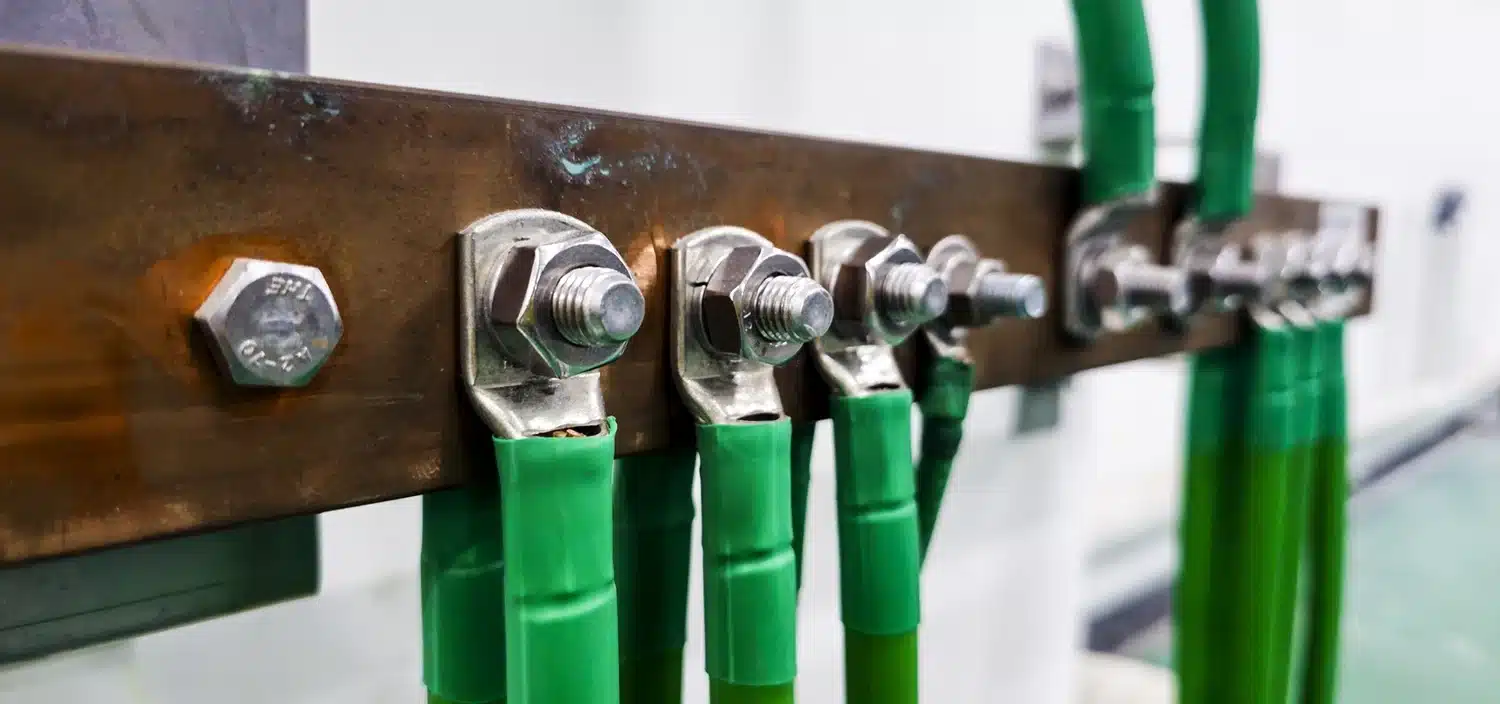
Grounding and bonding are critical to electrical safety. This module differentiates between Grounding Electrode Systems (GES) and Equipment Bonding Conductors. Students study NEC Article 250, learning how low-impedance fault-current paths protect people and equipment. Topics include grounding electrode conductor sizing and intersystem bonding requirements.

Lighting Systems, LED Technology & Intelligent Controls

This module explores modern lighting technologies used in residential and commercial environments. Students learn the transition from traditional ballasts to solid-state LED drivers, covering Color Rendering Index (CRI), color temperature (Kelvin), and 0–10V dimming systems. Instruction also includes occupancy and vacancy sensors and smart lighting controls.

Residential Electrical Installation & Specialized Circuits

From rough-in to trim-out, students learn residential installation techniques aligned with NEC and local building codes. Topics include conductor support, box placement, and protection against physical damage. Special emphasis is placed on kitchens, bathrooms, and laundry areas, including Small Appliance Branch Circuits (SABC), AFCI and GFCI protection, and dedicated circuit requirements commonly enforced during residential inspections.

Service Entrance Equipment & Utility Interconnections

This module covers electrical service entrance systems from the utility connection to the main service disconnect. Students study service entrance conductors, meter sockets, overhead clearance requirements, drip loop configuration, and lug torque specifications under NEC Article 230. Training prepares students for service upgrades and utility coordination, which are common tasks when working on aging electrical infrastructure.

Sub-Panels, Feeders & Auxiliary Structures

Students learn how to extend power safely using sub-panels and feeders. Topics include isolated neutrals, equipment grounding conductors, feeder sizing, voltage drop calculations, and burial depth requirements under NEC Table 300.5. Instruction emphasizes supplying power to detached structures such as garages and outbuildings while maintaining code compliance.

Commercial Raceways, Conduit Bending & Pulling

This module develops hands-on skills required for commercial electrical work. Students learn to fabricate Electrical Metallic Tubing (EMT) and PVC raceways, performing accurate bends such as offsets, saddles, and kicks using deducts and multipliers. Instruction includes raceway fill calculations, conductor pulling physics, and junction and pull box sizing for complex conduit runs. Additional coverage includes NEC support and securing requirements for raceways, conductor derating considerations, and practical application of NEC Articles governing EMT and PVC installations. Students learn how improper fill, bend radius, or support spacing can impact conductor integrity and code compliance.

Commercial Power Distribution & Demand Calculations

Students study commercial electrical distribution systems, focusing on demand-based load calculations. Topics include VA-per-square-foot calculations, demand factors, non-coincident loads, and load balancing across three-phase systems. This module prepares students for work in office buildings, retail spaces, warehouses, and mixed-use facilities.

Motors, Transformers & Industrial Power Systems

This module introduces industrial electrical equipment and power systems. Students study single-phase and three-phase motor operation, motor nameplate data, magnetic starters, and thermal overload protection. Transformer theory includes delta and wye configurations, turns ratios, and secondary bonding. Instruction also covers identification of common industrial voltage systems.

Low Voltage, Fire Alarm & Life Safety Systems

Students expand their skill set with low-voltage and life safety systems. This module covers structured cabling standards, including T568A/B termination and Power over Ethernet (PoE). Fire alarm instruction includes initiating devices, notification appliances, Class A and Class B circuits, end-of-line resistors, and fire alarm control panel monitoring required for commercial occupancies. Fire alarm instruction aligns with NFPA 72 standards, focusing on system supervision, circuit integrity, and code-mandated monitoring requirements. Students learn how life safety systems integrate with electrical infrastructure to meet occupancy and inspection requirements.

Emerging Technologies, EV Charging & Renewable Systems

This forward-looking module prepares students for evolving electrical technologies. Instruction covers photovoltaic (solar) system fundamentals, direct current power generation, inverters, and NEC rapid shutdown requirements. Students also learn Electric Vehicle Supply Equipment (EVSE) installation, including continuous load calculations, load management systems, and GFCI protection as EV infrastructure continues to expand.

Electrical Troubleshooting & Diagnostic Methods

Students develop systematic troubleshooting skills used by professional electricians. Instruction focuses on identifying open circuits, short circuits, ground faults, improper grounding conditions, and ghost voltage. Students learn proper meter selection, including low-impedance testing, to safely diagnose energized electrical systems.

Professional Development & Capstone Execution

The program concludes with professional development and a comprehensive capstone experience. Students complete a final hands-on project that integrates NEC compliance, system installation, testing, and troubleshooting across residential, commercial, and industrial applications. The module also includes career preparation, resume development, and guidance on pathways toward apprenticeship and electrician licensure in New Jersey.

Why The Training Center?

“Top notch facility, staff and education. Dan and his staff are super accommodating and treat everyone, regardless of background and experience, like a family.”

Bryan T
“The entire staff was great in giving you help in any way you needed it. Also, if you show that you are serious about this line of work, they would do anything possible to help you. The best.”

Damien Askew
“This place is a hidden gem. From day one it has been a huge learning experience from the flexible scheduling for people working, to how you have everything you need from the online setup. Super informative and you actually really learn here.”

Marco Martinez
Differences Icon

Our Difference

Trusted for over 40 years and recognized as a top trade school for Electrician training. Learn what sets us apart.
Student Success Icon

Student Success

More than just a school, we’re lifelong partners in our students’ careers, and we’re proud to share their success.

Reviews Icon

Reviews

We put students first, and their success matters most. See what some of our students say about their experiences.

Accreditation Icon

Accreditation

We are an accredited school, providing industry-recognized training approved by national and state authorities.

Top Electrician Training School in NJ

At The Training Center, we have over 40 years of experience helping students build successful careers in the trades. Our Electrical school in New Jersey specializes in training programs designed for all experience levels, from beginners to seasoned professionals. We prioritize accessible education by offering affordable tuition and flexible scheduling without compromising on quality. Our top-rated electrician training serves students across the entire state of New Jersey, serving:

  • Atlantic County, NJ
  • Bergen County, NJ
  • Burlington County, NJ
  • Camden County, NJ
  • Cape May County, NJ
  • Cumberland County, NJ
  • Essex County, NJ
  • Gloucester County, NJ
  • Hudson County, NJ
  • Hunterdon County, NJ
  • Mercer County, NJ
  • Middlesex County, NJ
  • Monmouth County, NJ
  • Morris County, NJ
  • Ocean County, NJ
  • Passaic County, NJ
  • Salem County, NJ
  • Somerset County, NJ
  • Sussex County, NJ
  • Union County, NJ
  • Warren County, NJ

Frequently Asked Questions (FAQs)

Is the electrician program approved by the State of New Jersey?

Yes. The Training Center is an approved Continuing Education Sponsor registered with the New Jersey Board of Examiners of Electrical Contractors. Our program is approved and delivered under that sponsor designation, ensuring the curriculum meets state requirements and that the classroom hours you earn count toward the 576 hours of Related Technical Instruction (RTI) required for an electrician license in New Jersey.

How do I become a licensed electrician in NJ?

To become a Licensed Electrical Contractor in New Jersey, you must complete both approved classroom education and supervised field experience. The state requires 576 hours of Related Technical Instruction (RTI) and 8,000 hours of on-the-job training under a licensed electrical contractor. Our program fully satisfies the entire 576-hour RTI classroom requirement, allowing graduates to register as apprentices and begin accumulating field experience on the direct path to Journeyman status and eventual licensure.

How much does the electrician training program cost?

The total tuition for the program is $15,000. This all-inclusive cost covers your certificate of completion, textbooks, NFPA 70E safety certificate, OSHA 10-Hour Construction Card, lab materials, and a professional tool bag you keep. There are no hidden fees.

Do you offer financing or payment plans?

Yes, we are committed to keeping trade education accessible. We offer flexible financing plans with payments starting as low as $190 per month. This allows you to manage the cost of your education while you train for your new career.

How long does the program take to complete?

The program is designed to be completed in 10 months. This accelerated timeline allows you to gain your 800 hours of training and enter the workforce as a skilled apprentice much faster than traditional 2-year college programs.

Do I need to be good at math to be an electrician?

You need a grasp of basic algebra, but you do not need to be a mathematician. Our Electrical Theory module teaches you the specific math you need for the job, such as Ohm’s Law for calculating voltage and resistance, and load calculations for sizing panels. We break these concepts down into practical, real-world applications so they are easy to learn.

Is the electrician program hands-on or online?

“The electrical program is in-person at our Branchburg, NJ campus. The curriculum totals 800 hours, with 590 hours dedicated to hands-on training. To provide flexibility for working students, we offer three daily class schedules (Morning, Afternoon, or Evening) along with optional makeup days in case you miss a class.

Does the program include job placement support?

Yes. Our Career Services team provides dedicated support, including a specialized career planning, resume, and interview support. We actively network with electrical contractors across New Jersey to help our graduates secure registered apprenticeships.

What is the difference between Residential and Commercial electrical work?

Residential electricians typically work on homes, installing wiring, outlets, and service panels. Commercial electricians work in offices and schools, dealing with higher voltages, three-phase power, and running conduit (piping) for wires. Our program covers both sectors, plus industrial controls, ensuring you graduate with the versatility to work in any part of the industry.

Start Your Boiler Career Today!

HAVE QUESTIONS?

Speak with a Real Person, We’re Here to Help!