
$390, No Additional Fees

Nationwide Certification


100% Online Course & Exam

No Cost Exam Retakes
CPO Certification Course Overview


The Training Center is a top-rated provider of CPO Certifications. We are officially approved by the Pool & Hot Tub Alliance (PHTA), the governing body for Certified Pool Operator (CPO) certification across the United States. Our course is offered entirely online and accepted nationwide, providing the credential required by health departments and aquatic facilities. The curriculum follows official PHTA standards and aligns with both state and national regulations for commercial and public pool operations.
Our CPO Certification course serves both new pool operators and professionals renewing their credential. It provides everything you need to get certified, including the CPO exam & training. This course is fully online, combining live classes with flexible learning options, allowing students to train on their own schedule. The class covers essential topics in pool operation, including water chemistry, filtration systems, safety procedures, and regulatory compliance, preparing participants to meet all industry and health department standards for pool management.


Check CPO Certification Requirements
CPO Certification requirements differ across states because each jurisdiction enforces its own public health and safety regulations. The PHTA sets national training standards, but individual health departments decide whether online CPO programs are approved or if classroom instruction is required.
Before registering, use the tool below to confirm that online CPO Certification is accepted in your location. Checking your local requirements ensures that your credential will be fully recognized by health officials in your state.

State CPO Requirements
CPO Certification Course Schedule
Choose the CPO Class Format That Fits You
Initial CPO Certification

Independent Prep Route (Initial CPO)
Session (Initial CPO)
10am – 3pm ET
CPO Renewal

10am – 3pm ET
Choose Your Ideal Pathway for your CPO Exam
✔ Study quizzes first & schedule exam later
Speak with a Real Person, We’re Here to Help!
✔ Office Hours: 8:00 am – 4:00 pm ET
CPO Certification Explained
What Is CPO Certification?
The Certified Pool Operator (CPO) Certification is the industry’s standard credential for professionals who operate, manage, or maintain public and commercial swimming pools and spas. It verifies that an operator has the technical knowledge and safety expertise needed to manage aquatic facilities in compliance with public health and safety codes.
Created and overseen by the Pool & Hot Tub Alliance (PHTA), this certification is recognized by state and local health departments across the United States as the benchmark for professional competency in pool operation.
CPO Certification covers the complete scope of pool and spa management, including:
- Water chemistry, disinfection, and balance
- Circulation and filtration systems
- Chemical handling, feed, and control systems
- Safety protocols and risk management
- Inspection readiness and documentation
In most U.S. States, CPO Certification is required for public or commercial pools, such as those at hotels, apartment complexes, schools, fitness centers, and waterparks. Completing this course ensures that you meet all regulatory standards and gain a nationally recognized credential in the pool and spa industry.
Who Needs CPO Certification?
CPO Certification is essential for anyone directly involved in the maintenance or operation of public or commercial pools. This includes:
- Pool operators and facility managers
- Maintenance technicians and aquatic staff
- Hotel, fitness club, and property management personnel
- Municipal, school, or recreational facility employees
Many state and local health codes require at least one certified operator on-site whenever a pool is open to the public. Even where it’s not legally required, employers, inspectors, and insurers commonly view CPO Certification as the gold standard for safe and compliant operations.
Earning this credential also helps you:
- Prevent costly violations and shutdowns
- Improve water quality and reduce chemical costs
- Extend the life of pumps, filters, and heating systems
- Build trust with employers, inspectors, and guests
By completing your Certified Pool Operator Certification, you demonstrate your professional expertise and commitment to maintaining safe, compliant, and efficient aquatic facilities.
How Does The CPO Exam Work?
The CPO Certification Exam is the final step to earning your credential. It is administered by the Pool & Hot Tub Alliance (PHTA) and designed to evaluate your understanding of pool operation, water chemistry, and safety practices.
CPO Exam Details:
- 50 multiple-choice questions
- Open-book, using the official PHTA Pool & Spa Operator Handbook
- Calculator permitted
- Passing score: 74%
You can complete the exam online at your convenience after finishing your coursework. Your instructor will guide you through registration and exam access.
At The Training Center, all allowable exam attempts are included in your course tuition, with no hidden fees or retake charges. Study materials, practice tests, and instructor support are provided to help you prepare confidently.
Once you pass, you’ll receive your official Certified Pool Operator certificate and ID card, valid for five years under PHTA standards. When your credential expires, simply complete our CPO Renewal Course to stay current.
PHTA CPO Exam Attempts and Retake Policy
The Pool & Hot Tub Alliance (PHTA) periodically updates national policies to maintain consistency and exam integrity.
The Certified Pool Operator exam requirements outline how testing and retakes are managed under the most recent national standards set by the PHTA National Policy, which apply to all PHTA-approved training providers.
Each student now receives up to three test attempts to pass the national CPO exam:
- Attempt 1: Initial exam
- Attempts 2–3: Two retakes if needed
- Time Limit: All retakes must be completed within six months of your original test date
After your third exam attempt, PHTA requires students to retake the full course before continuing with additional attempts. Unlike other CPO providers, The Training Center covers all allowable exam attempts and course retakes at no extra cost to you, ensuring every student can successfully earn certification.
This policy ensures fairness, accessibility, and full compliance with the national standards established by PHTA. These updates reinforce PHTA’s ongoing commitment to education quality, safety, and uniform standards for pool and spa professionals nationwide.
Where Is CPO Certification Valid?
The CPO Certification is accepted throughout the United States, though enforcement and specific requirements vary by jurisdiction. Most health departments recognize the PHTA-issued credential as the official certification for pool operators, while some areas require additional classroom training or local registration.
Below is a full list of U.S. states where the CPO Certification is recognized. Visit our state pages below for more information on local health codes, regulations, and approval details.
Alabama • Alaska • Arizona • Arkansas • California • Colorado • Connecticut • Delaware • Florida • Georgia • Hawaii • Idaho • Illinois • Indiana • Iowa • Kansas • Kentucky • Louisiana • Maine • Maryland • Massachusetts • Michigan • Minnesota • Mississippi • Missouri • Montana • Nebraska • Nevada • New Jersey • New York • North Carolina • North Dakota • Pennsylvania • Rhode Island • South Carolina • South Dakota • Tennessee • Texas • Utah • Virginia • Vermont • • Washington • West Virginia • Wisconsin • Wyoming
What Is the Pool Operator Primer?
After completing the primer, students receive a Record of Completion that can be printed or saved digitally. Your PHTA-certified instructor must verify this completion before you attend the live Zoom session.
For your convenience, The Training Center offers multiple CPO course formats. The Pool Operator Primer is only required for the Independent Prep Route. Students who choose the Fully Guided 4-Class Series do not complete a separate primer, as the same foundational material is fully integrated into the live instructor-led sessions. The CPO Renewal course also does not require a primer, as it is designed exclusively for experienced, previously certified operators.
This flexible structure allows you to choose the learning format that best fits your schedule and experience level while ensuring every student meets all PHTA training requirements.
Advantages of Our CPO Course

Exam Retakes Included

Access to Practice Exams

View Class Recordings

Credentials Delivered Fast

Shortest One-Day Commitment

CPO Recertification Available
CPO Course Curriculum
The Certified Pool Operator (CPO) Certification Course provides comprehensive, instructor-guided training that blends theory with real-world application. The curriculum follows the official Pool and Hot Tub Alliance (PHTA) standards and covers every key area of modern aquatic facility management. Students gain the technical knowledge, safety awareness, and operational skills required to pass the CPO exam and operate pools and spas confidently, efficiently, and in full compliance with health department codes.
This section outlines the complete curriculum included in The Training Center’s PHTA-approved CPO Certification Course. Each module builds professional expertise in core areas such as water chemistry, disinfection, mechanical systems, safety procedures, and maintenance. These are the essential skills every certified pool operator needs to manage aquatic facilities safely and effectively.
CPO Course Modules and Topics
| Course Module | Description of Training |
|---|---|
| Pool and Spa Management | Covers day-to-day operations for pool and spa facilities, including scheduling, staffing, customer service, and regulatory compliance. Students learn how to apply management principles that keep facilities safe, efficient, and welcoming to patrons. |
| Regulations and Compliance | Explains federal, state, and local pool operation codes and public health regulations. Training emphasizes inspection readiness, safety signage, documentation procedures, and how to maintain compliance with local authorities. |
| Water Chemistry and Balance | Teaches the principles of pool water chemistry, pH, alkalinity, calcium hardness, and total dissolved solids. Students learn to correct imbalance, prevent corrosion or scaling, and maintain optimal swimmer comfort. |
| Disinfection and Sanitization | Provides detailed instruction on chlorine, bromine, and alternative disinfectants. Topics include dosage calculations, breakpoint chlorination, oxidation, and how to maintain clean and safe water. |
| Contamination and Water Quality | Reviews contamination sources such as algae, bacteria, and debris, along with treatment and prevention strategies. Students gain the skills to restore water clarity and protect swimmers from pathogens. |
| Circulation and Hydraulics | Explores how pumps, drains, inlets, and piping systems move water through pools and spas. Includes training on turnover rates, flow patterns, and avoiding suction and entrapment hazards. |
| Filtration Systems | Explains the function and maintenance of sand, cartridge, and diatomaceous earth (DE) filters. Students learn backwashing procedures, troubleshooting filter problems, and maintaining consistent water clarity. |
| Chemical Testing and Feed Systems | Demonstrates how to perform accurate water testing and operate automated chemical controllers. Instruction includes interpreting results, calibrating equipment, and keeping records required by health inspectors. |
| Essential Calculations | Builds practical math skills for pool professionals, including volume, flow rate, turnover, and dosage formulas. Students practice applying these calculations to real-world pool systems and scenarios. |
| Heating, Air Circulation, and Energy Efficiency | Covers heating systems such as gas, electric, and solar, along with air handling, ventilation, and dehumidification. Emphasizes energy conservation and maintaining comfortable indoor environments. |
| Spa and Therapy Operations | Focuses on managing hot water facilities like spas, whirlpools, and therapy pools. Lessons include chemical control at higher temperatures, safety procedures, and regulatory requirements for these environments. |
| Safety and Risk Management | Teaches emergency planning, signage, and accident prevention for aquatic environments. Students learn how to recognize hazards, develop response protocols, and maintain safe operating conditions. |
| Maintenance and Troubleshooting | Provides a framework for identifying and resolving mechanical or chemical issues with pumps, heaters, filters, or circulation systems. Includes preventive maintenance planning to reduce downtime. |
| Recordkeeping and Documentation | Outlines how to maintain daily water quality logs, incident reports, and inspection records. Proper documentation ensures regulatory compliance and supports long-term operational accountability. |
| Facility Renovation and Design | Discusses modern pool design standards, ADA accessibility, safety upgrades, and sustainability improvements that extend facility life and enhance user experience. |
Get Started Today


Why The Training Center

“CPO training at The Training Center was absolutely the best. The class was informative and useful in preparing for the exam. Their dedicated staff and instructors are the best in the business. I will be using them again as I get my staff trained up. Great job and thank you.”
Robert Harmon

“I loved this online training class for my CPO Certification. Learned so much and definately was able to get a better grasp on my own pool system in general. I loved Nicole too, so informative and makes this class exciting to learn about pools, which is not easy to do. Thanks to The Training Center for putting on a great, informative class online.”
Katie Kilner
“CPO instructor Nicole is awesome. It’s always best to have an instructor that cares about what they’re teaching and you can tell she definitely cares about her course.”
Ivan Ascencio
“Nicole and Dan were excellent. We went over a bunch of information to prepare for the CPO test and now I feel confident. They were both very patient and allowed for as many questions as we needed. They truly care about what they are doing and you can tell.”
Krystin Coombs
“This CPO course was taught amazingly well. They cared about all the students and answered all our questions. I highly recommend this course for anyone interested. Thank you again for making this a pleasurable experience.”
Bruce Adams

Our Commitment to Your Success
Meet The CPO Team

Dan Moscatiello
CPO Program Manager
With an extensive background in facility management, Dan is passionate about promoting a safety-first mindset and supporting student growth
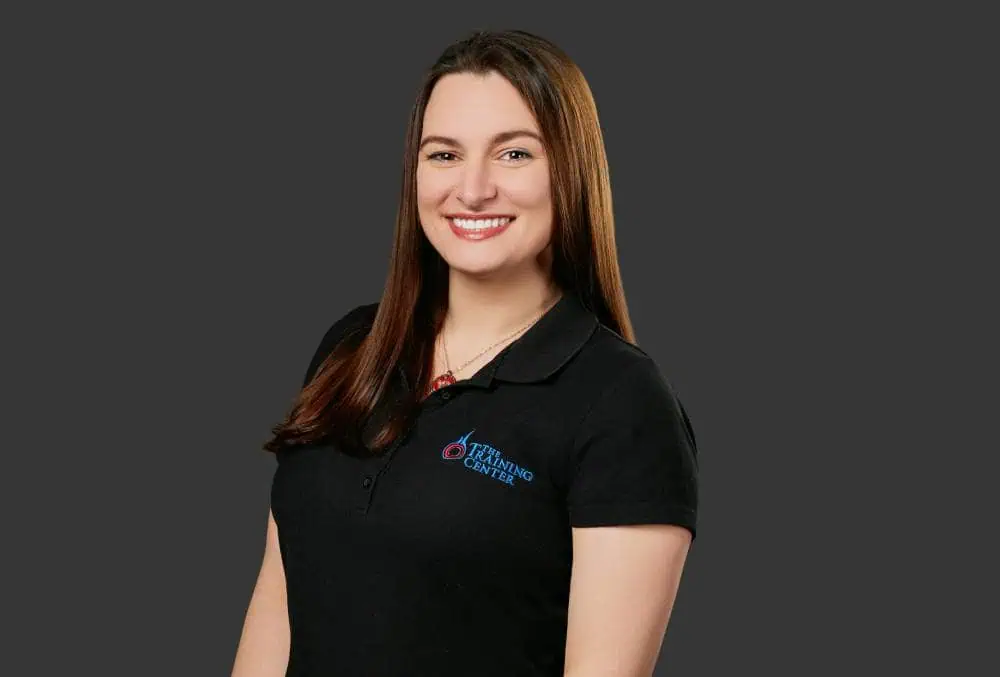
Nicole Coleman
CPO Course Director & Instructor
With 20 years in education, Nicole (Nik) leads with a student-centric course model, focusing on teaching critical thinking and real world applications.

Bianca Alcazar
Sr. Certification Specialist
Instrumental in the quick processing of all CPO credentials, Bianca recognizes the student effort to complete each course and matches that effort on a daily basis.
Frequently Asked Questions (FAQs)
What does your CPO Certification Course include?
How do I get a CPO Certification?
Is your CPO Course offered 100% online?
How long does it take to complete the CPO class?
What happens if I fail the CPO exam?
Do I need to buy a textbook for the class?
How fast will I get my CPO certificate?
How do I renew my CPO Certification when it expires?
Can I schedule CPO team or group training?

Get your CPO Certification