Pursuing a career in HVAC (Heating, Ventilation, and Air Conditioning) is one of the best trade paths a young professional can choose in New Jersey. Skilled trades offer some of the strongest returns on education, with shorter training, lower costs compared to four year colleges, and faster pathways into paid work.
As a generation of baby boomers retires, they leave behind a growing gap in essential services. HVAC is at the center of this demand. Homes and businesses need heat in the winter and cooling in the summer, and HVAC systems are critical across nearly every sector, including retail, hospitality, healthcare, and manufacturing.
On top of that, HVAC is relatively secure from automation and AI compared to many office based careers. For anyone looking for a stable, hands-on profession, choosing the right HVAC school in New Jersey is a key first step.
This guide walks through how to compare the top HVAC schools so you can choose an HVAC Technician Training Program in New Jersey that fits your goals, budget, and timeline, and actually prepares you for the field.
Key Summary
- HVAC is a high demand, stable career path in New Jersey with strong long term job security.
- Top HVAC schools in NJ differ widely in tuition, schedule flexibility, class size, and hands on training quality.
- Cost alone can be misleading, the real goal is finding a program that offers a strong return on investment and gets you field ready.
- Hands on lab work, up to date equipment, and small student to teacher ratios are critical for learning real HVAC skills.
- Flexible scheduling and hybrid learning options help students balance work, family, and school.
- Programs that support certifications, licensing steps, and job placement give graduates an advantage in the job market.
- The best HVAC schools in New Jersey combine affordability, personalized instruction, and strong career outcomes.
Is HVAC a Good Career?
A career in HVAC has several advantages that make it an attractive choice, especially in New Jersey:
- Consistent demand: Heating and cooling are year round essentials for homes, offices, and industrial facilities.
- Protection from automation: HVAC work is hands on, location based, and requires problem solving in the field, which makes it less vulnerable to AI and automation.
- Solid pay and growth: Technicians can increase their earnings as they gain experience, specialize, or move into supervisory and business owner roles.
- Multiple career paths: Common roles include:
- Residential service technician
- Residential installation technician
- Commercial refrigeration technician
- Commercial service technician
- Commercial package unit installer
- Building maintenance
- Appliance repair
In New Jersey, there are also clear experience levels that outline a career ladder:
- HVAC Journeyman: Has completed trade school or equivalent training, spent several years working under supervision, and is in a stage where they can work more independently in the field.
- Master HVAC Technician / Contractor: Has completed formal education, apprenticeship hours, journeyman level experience, and passed state level exams to hold a license that allows them to pull permits and in many cases operate a business.
Beyond pay and stability, HVAC offers lifestyle benefits. Many technicians enjoy working in different locations instead of being tied to a single site. Senior technicians or those who eventually run their own trucks or businesses often have more control over their schedules and daily work.
In New Jersey, the HVAC job market is especially strong thanks to dense housing, extensive commercial buildings, and year round heating and cooling needs, which keeps skilled technicians in steady demand.
How To Compare The Top HVAC Schools in NJ
If you have decided HVAC is the right field for you, the next step is choosing where to train. New Jersey offers several well known schools, including The Training Center, Lincoln Tech, Pennco Tech, and Fortis Institute.
The goal is not just to pick a brand name, it is to choose a school that truly prepares you for the field. Use the factors below as a checklist when comparing programs and deciding which accredited HVAC School in New Jersey is the best fit for your goals.
1. HVAC School Affordability and ROI
Investing in education is a big decision, and it is normal to worry about cost. Tuition for HVAC programs in New Jersey can vary widely, and a higher price does not always mean better training.
Some large, national trade schools charge premium tuition, but many smaller schools offer strong hands on education at a fraction of the cost. When comparing programs, think in terms of return on investment rather than price alone. The real question is: How quickly will this program help me gain skills, get hired, and start earning?
Here is a cost comparison of several New Jersey trade schools for HVAC programs:
| NJ Trade School | HVAC Tuition Cost |
|---|---|
| Lincoln Tech | $33,713 |
| Universal Technical Institute (UTI) | $26,765 |
| Pennco Tech | $26,620 |
| Fortis Institute | $22,766 |
| The Training Center | $15,000 |
These 2026 tuition costs are based on publicly available information from New Jersey trade school websites and program catalogs at the time of writing. Actual costs may vary and should always be confirmed directly with each school.
A more affordable program that delivers strong, practical training and prepares you for certifications will usually outperform a more expensive program that is heavy on classroom time and light on real world skill building.
If you are also comparing these options with New Jersey community colleges, our article on Trade School vs Community College in New Jersey breaks down average tuition, program length, and key differences in training.
2. HVAC School Schedule and Flexibility
Most students entering HVAC school are juggling other responsibilities: jobs, family, or existing commitments. The best programs recognize this and design their schedules to work for adult learners.
As you compare different HVAC Classes in New Jersey, pay attention not just to the schedule on paper, but to how realistically each program fits around work, family, and commute time.
- Are there day and evening options?
- Is there any hybrid or remote learning for theory based classes?
- What happens if you need to miss a class, can you make it up or access recordings?
- How often do labs meet, and can you reschedule hands on sessions when life gets in the way?
You want a program that provides structure without being rigid. The right school should help you fit training into your life, not force you to rearrange your entire life around school.
3. Quality of HVAC Hands On Training
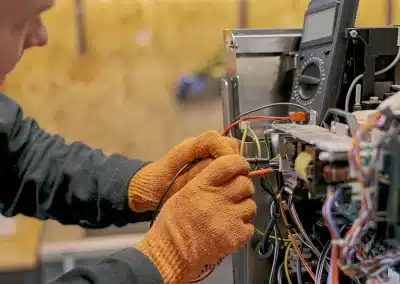
Hands on training is where HVAC skills are truly built. Reading about a condenser in a textbook is not the same as tearing one down, wiring a thermostat, or troubleshooting a low charge system under time pressure.
When evaluating programs, dig into the actual lab work:
- How many hours of hands on practice does the program include?
- Do you work on modern, real world equipment that matches what is in the field today?
- Are labs structured around realistic scenarios and troubleshooting, or just basic demonstrations?
A good rule of thumb: If the lab equipment looks spotless and brand new, it might not be getting used very much. A strong HVAC Training Program will have equipment that shows real wear from students practicing, making mistakes, and learning how systems behave in real conditions.
4. Student To Teacher Ratio
Even the best lab does not help much if you are one of thirty students trying to crowd around a single unit while one instructor explains everything.
A low student to teacher ratio is one of the clearest signs that you will get individual attention and real time feedback. Smaller groups allow instructors to:
- Watch you work and correct mistakes immediately
- Adjust the pace for the class
- Spend extra time with students who need clarification
- Get to know your strengths and weaknesses for better job recommendations later
Here is a comparison of average student to teacher ratios at several New Jersey trade schools:
| NJ Trade School | Average Student-To-Teacher Ratio |
|---|---|
| Lincoln Tech | 30:1 |
| Pennco Tech | 30:1 |
| Universal Technical Institute (UTI) | 25:1 |
| Fortis Institute | 20:1 |
| The Training Center | 7:1 |
Smaller classes can make the difference between barely getting by and truly mastering the trade.
5. Job Placement Support and Career Outcomes
Finishing school is just the beginning. The real test of any HVAC program is how well it helps you transition into the workforce.
When comparing top HVAC schools in NJ, look at:
- Do they help you with resumes, interview prep, and job search strategy?
- Do they have relationships with local HVAC companies, facility managers, or mechanical contractors?
- Do they track where graduates end up working?
Some programs also integrate important industry credentials directly into the curriculum, such as:
- EPA 608 Certification for working with stationary refrigeration and air conditioning systems
- A2L Refrigerant Certification for handling new low GWP and mildly flammable refrigerants
These credentials give you an immediate edge with employers and show that the school is preparing you for today’s refrigerant standards, not last decade’s equipment.
Which HVAC School in New Jersey Is Best?
There is no single “best” HVAC school in New Jersey for every person. The right choice depends on your budget, schedule, learning style, and career goals.
However, the top HVAC schools in NJ tend to share the same core qualities:
- Reasonable tuition with strong return on investment
- Flexible schedules that respect adult learners
- Heavy emphasis on hands on training, not just lectures
- Small student to teacher ratios and real instructor attention
- Built in support for certifications and job placement
The Training Center brings these strengths together as a New Jersey trade school focused on HVAC, backed by over 40 years of experience helping people build careers in the skilled trades. Our HVAC Technician Training Program is designed to get you field ready, with:
- Live instructor led classes and immersive hands-on lab work
- Small class sizes for personalized instruction
- Curriculum that includes industry recognized certifications including EPA 608 and A2L refrigerants.
- Ongoing support as graduates move into entry level roles and grow their careers
When you take time to compare schools using the factors in this guide, you put yourself in the best position to choose a program that is not just a school, but a launchpad for a long term, stable HVAC career in New Jersey.
2026 tuition and costs in this guide are based on publicly available information from New Jersey trade schools and community colleges, including Lincoln Tech, Fortis Institute, Pennco Tech, and The Training Center, as well as sources such as Niche and College Raptor. For the most current tuition and fee information, always confirm directly with each school.
Source for data: Lincoln Tech 2025 program catalog, Fortis Tech 2025 program catalog, Niche, College Raptor, onlytradeschools.com